Saturday, June 7, 2014

"Why are you standing there looking at the sky?"

(Acts 1:11)

“Mission accomplished!” thought the 11 dumbfounded, open-mouthed apostles frozen in time and “looking intently at the sky” as their teacher, friend, and hope vanished from their sight.  At least that is one way I imagine the moments that followed Jesus’ Ascension into heaven, which melded astonishing victory and paralyzing uncertainty.  The emotions were probably mixed: “Stick a fork in us, we’re done! That’s all, folks! Pack up and go home!” But, the sense of completion would turn quickly to confusion and abandonment: “Now what?  Really?  I guess that’s it?”  I have no doubt that all were feeling like shipwreck survivors watching a helicopter hover away leaving them to reclaim their grip on the flotsam.  I can just feel the apostles’ hearts collectively sink to their stomachs as they realized what they were witnessing, and all they could do was stand there helplessly and gape. In that moment the mission was far from over; in fact, the apostles’ role in the mission was being renewed and expanded beyond their imaginings.  We have a lot to learn by placing ourselves in the scene.  The days between the Church’s commemoration of the Ascension and the descent of the Holy Spirit at Pentecost mark for us a time to reflect on that which petrifies us and keeps us from responding to our mission—that which makes the angels urge us, “Why are you standing there looking at the sky?” 

I like to think about what those angels might have liked to say to the stunned apostles in that moment (had they been slightly less angelic):

“Don’t you remember what he just told you, ya dummies?  It’s only been like ten seconds. I’ll say it again, but this time a little bit slower: He’s sending the Holy Spirit! You’re going to be his witnesses! You’ve got nothing to be afraid of.  Can’t you remember that he blessed this earth by walking among you and baptized it by his baptism in water?  He died for you and for everyone. He rose again and conquered death! Sins are forgiven! Love wins!  That’s GOOD NEWS!  How many times did he have to tell you this to get it through your thick skulls? Don’t just stand there! Do something! GO FORTH!”

Well, it seems we might need a few days to think this entire thing over if that’s okay.  It sounds kind of scary. Jesus could rock the boat, but we surely can’t.

“Heaven to the apostles. Heaven to the apostles…I’m sending you the Holy Spirit. Duh.”
We still don’t really get it.

“The Holy Spirit?  You know, the Paraclete?”

Now we’re even more confused. Is that some kind of bird or something?

“Well, ok, so sometimes the Holy Spirit does look like dove…I’ll give you that…but I think you might be thinking of a parakeet.”

Yeah, that’s it--a parakeet!

“Now you’ve completely distracted yourselves. Forget it.  You’ll understand in a few days.”

God is so patient with us.

Back to the present: What is it that petrifies us and keeps us looking towards the sky? Have we even taken a moment to hear the angels’ voices goad us onward?  Fortunately, we have been blessed with the seven-week long Easter season to prepare our hearts for the coming of the Holy Spirit.  We have been hearing in the gospels again and again that Jesus will not leave us orphans and that the Holy Spirit will come upon us.  We are reminded that the time that comes after the Ascension is the age of the Holy Spirit; we are living in that age! Have we realized that?  

The pope has been keen to remind us of the role of the Holy Spirit in our lives by his recent words and actions. In his homily during mass in Jordan, Pope Francis explained, “In a word, we can say that the Holy Spirit carries out three actions – he prepares, he anoints and he sends.”
Every authentic encounter with the Holy Spirit sends us forth.  It is the Holy Spirit that prepares us for our mission and drives us to carry out Jesus’ command to go and make disciples of all nations.  The Spirit leads us on our missionary journey. Why then, if Jesus has sent the Spirit, are we still standing still?  As Pope Francis has said, “The gentrification of the heart paralyzes us.”  It is the fear of the unknown other.  I become so comfortable in my home, with my family, in my neighborhood, and with my friends that I start to become besieged in these comforts.  Outside of them I--like the apostles looking at the sky--become confused, frightened, and doubtful.  I cannot tear down these walls and be with the poor.  I cannot truly live the gospel. I cannot go forth.   

In the papal exhortation The Joy of the Gospel, Pope Francis tells us, “Each Christian and every community must discern the path that the Lord points out, but all of us are asked to obey his call and go forth from our own comfort zone in order to reach all the ‘peripheries’ in need of the light of the Gospel.” (EG, 20) The pope is telling us that every community must go forth.  We might make excuses, but being Christian means being a missionary.  We are all called to leave behind that which prevents us from sharing the Good News; however, what going forth actually looks like depends on the unique gifts that have been bestowed upon each community.  This is the advice I give when people tell me that they wish they could serve in a foreign mission, but cannot: You don’t have to go to Honduras, Uganda, or India to find the marginalized.  Look in your own city.  Take out a map.  Draw boxes around the neighborhoods that you have never visited.  One of those boxes is probably where you should go.  Of course, I highly encourage foreign mission work, but we have to recall that this is one calling among literally billions, which must be discerned.

The most important thing is to go forth and to challenge ourselves to be builders of the unity for which Jesus prayed, “that you may be one.” Jesus has sent us the Spirit to propel us towards loving others in our diversity and fortifying the bonds of the human family. This is, according to the pope, the mission of the Holy Spirit: “to beget harmony.” It will take effort, creativity, and patience to achieve the unity that flourishes with true evangelization. The pope reminds us:

“Peace is not something which can be bought; it is a gift to be sought patiently and to be ‘crafted’ through the actions, great and small, of our everyday lives. The way of peace is strengthened if we realize that we are all of the same stock and members of the one human family; if we never forget that we have the same heavenly Father and are all his children, made in his image and likeness.”

When we trust in the mission of the Holy Spirit, we begin to see a person not as a stranger but as a child of God. The barriers begin to fall and going forth becomes easier. We become more patient, peaceful, joyful, and loving; these are fruits of the Holy Spirit at work. So, today let us pray for openness to receiving the gifts of the Holy Spirit in our lives that all might experience the fruits. With Pope Francis we pray:

“Let us ask the Spirit to prepare our hearts to encounter our brothers and sisters, so that we may overcome our differences rooted in political thinking, language, culture and religion. Let us ask him to anoint our whole being with the oil of his mercy, which heals the injuries caused by mistakes, misunderstandings and disputes. And let us ask him to send us forth, in humility and meekness, along the demanding but enriching path of seeking peace.”

Let us not find ourselves petrified looking up at the sky. Let us go forth!

Thursday, May 1, 2014

Happy

So good that I had to share: https://www.youtube.com/watch?v=EYbwyHhrlGE&feature=youtu.be

Thanks to Patrick and the 4th graders for making this awesome video!

Monday, March 24, 2014

The Missionary Call: A Revolution of Tenderness

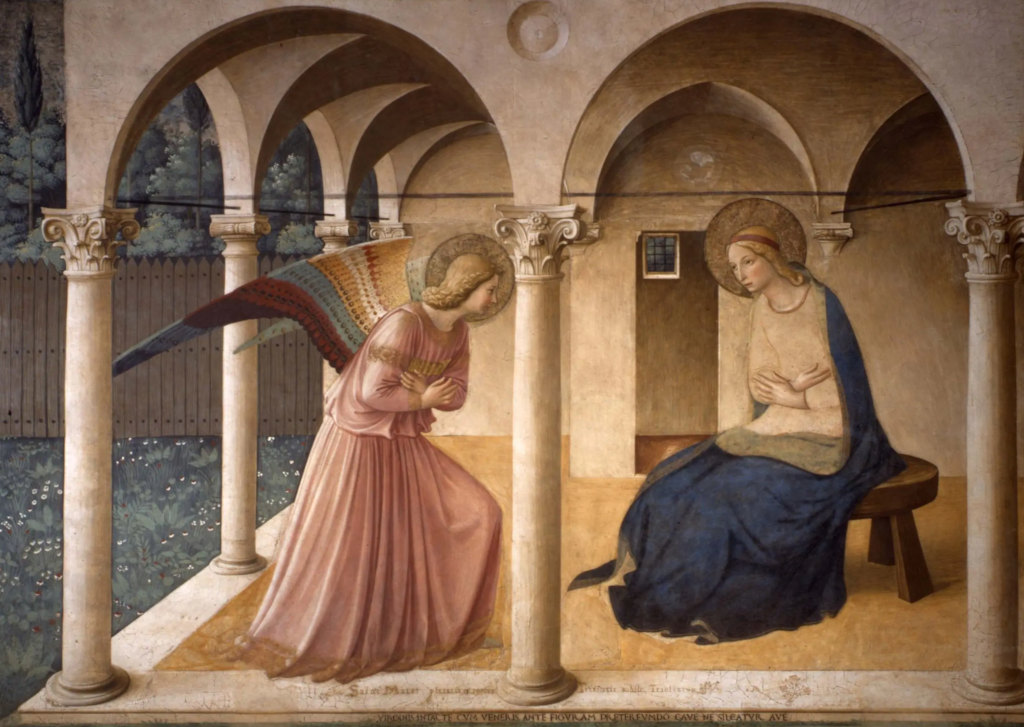
As a freshman at Georgetown University, I often wondered to myself: why do the bells of the clock tower sound a distinct peal at noon and again at six in the evening? (Being a college student, I had no idea that an identical clanging occurred at 6 A.M. too).  Despite my Catholic upbringing, it was not until a priest explained to me sometime during my sophomore year that the joyful dancing of those bells was a call to prayer, a reminder of God’s real presence among us, that is, the Incarnation.  The bells draw us into the life rhythm of the Church and remind us to say a prayer called the Angelus.  Most Catholics of my generation respond in unison, “the what?” After over two years serving in a foreign mission, I can now propose that the Angelus, a kind of reliving of the joy of the Annunciation, is the most apt explanation of the missionary experience.  Hold on; I’ll explain.

Jump ahead a few years to the coastal tropics of Honduras at six in the morning.  The whole community of the Finca del Niño shuffles into the chapel in various states of consciousness to prepare for Morning Prayer.  About 35 children, a dozen foster parents, three Franciscan sisters, and twelve foreign missionaries find their way to their usual spots in the pews as if seats were assigned.  The prayer, the Angelus, begins:  

The Angel of the Lord declared to Mary; And she conceived of the Holy Spirit.

We learn from Mary, the disciple par excellence, that the first step on the missionary journey is to receive God’s call.  Although we may not be blessed by visits from heavenly beings, we can certainly take the time to listen to God in prayer, hear what our trusted friends and family members are urging us to do, and come to know our own gifts and desires, which God can put to use.  We welcome the Holy Spirit into our lives.  This is called discernment, and it is the beginning of our mission.

We must become aware that God has selected each one of us for a mission and that God chooses us out of an immense and personal love.  God has loved us first.  The mission statement of the Finca del Niño begins with the words, “In gratitude for the great love that Jesus Christ gives us…” and only then follows the commitment to share that love with the children in our care.  Pope Francis tells us that only in a renewed encounter with God’s love and friendship do “we find the source and inspiration of all our efforts at evangelization.  For if we have received the love which restores meaning to our lives, how can we fail to share that love with others?” (Evangeleii Gaudium, 8)  Therefore, God’s call to mission is not merely listening, but also receiving God’s love with a joy that overflows into the world. 

Behold the handmaid of the Lord: Be it done unto me according to Thy word. 

God calls; we receive God’s Word.  Perhaps at first we say with Mary, “How can this be?” (Lk. 1:34)  Are you sure, God?  But, God has heard all of the excuses.  I am inarticulate; Moses tried that one (Ex.4:10-17).  I am too young; Sorry, Jeremiah (Jer. 1:4-9).  I’m weak and afraid; oh, do you mean like Saint Paul? (1 Cor. 2:3).  In perfect freedom we hand ourselves over to the Master Builder to be the imperfect tools in his impeccable hands.  God is well aware that we are human.  He made us that way, but he made us free, too.  God asks us to use that freedom to say “yes” with humility and faith to the project of bringing the Incarnate Word into the world each day; therefore, we come before God as humble servants.   

Like Mary, we are called not for our own prestige, success, and reputation, but for the glory of God.  This is God’s project not just another line on a résumé; thus, we abandon ourselves completely to God’s will trusting that he will bring forth the fruits that he desires.  So many times during my mission, I looked to God and said, “I am too weak.  I can’t go on. I don’t know what to do.” In those moments God said to me, “My grace is sufficient for you, for power is made perfect in weakness.” (2 Cor. 12:9) So with the boldness of our Blessed Mother, we go forth to evangelize asking God to take all that we are—tired, weak, stressed, confused, too old, too young--and to give us only his love and his grace; those will be enough.

And the Word was made Flesh: And dwelt among us.

Here is the truly miraculous and mysterious part: when we say “yes” to God in perfect freedom, we give flesh to the Word of God.  We believe that we, the members of the Christian community, are the Body of Christ, and when we freely embrace this mystery, it becomes a reality. When we daily affirm our missionary call to exemplify the truth through words and actions, Christ, the living God, comes into the world again and again.  As St. John writes in his first letter, “No one has ever seen God.  Yet if we love one another God dwells in us, and his love is brought to perfection in us.” (1John 4:12)  In this way Jesus, the living sacrament of God’s love for us, continues to become flesh and dwell among us.    

As we search the Sacred Scriptures, we continue to see that the Incarnation and the missionary call are intimately intertwined.  Receiving the good news of a God who seeks nearness with us sends us forth to that message.  We are reminded that it is the joy of the Incarnation that propels Mary on her journey to share that good news with her cousin Elizabeth.  As Jesus directs us in the final words of Matthew’s gospel, “Go, therefore, and make disciples of all nations, baptizing them in the name of the Father, and of the Son, and of the Holy Spirit, teaching them to observe all that I have commanded you.  And behold, I am with you always, until the end of the age.” (Mt. 28: 19-20)  Jesus remains with us and provides the spark for a renewed missionary spirit.     

As Pope Francis tells us, recognizing the potency of the Incarnation changes everything: “The Son of God, by becoming flesh summons us to the revolution of tenderness.” (EG,88)  God does not seek to be distant from us; rather, in Jesus, God comes as close to us as he possibly can.  He gives us his very flesh and blood.  Jesus humbles himself to share in our weakness, even to the point of death.  In order to be Christ incarnate, we too are called to diminish ourselves and meet those who are on the periphery.  The Holy Father has guided us toward this truth saying, “I see clearly that the thing that the Church needs most today is the ability to heal wounds and to warm the hearts of the faithful; it needs nearness, proximity.” (America, 24) As true Christians, we cannot remove ourselves from earthly reality, even in the face of suffering; rather, the Incarnation calls us to the kind of solidarity God himself has demonstrated for us and with us.

This “revolution of tenderness” is not a materialistic revolution; that is, it does not in any way suggest that we ought to be attached to material things, power, or prestige.  This certainly can be a temptation of one who dwells in the world. The temptations that Christ battled in the desert are the same ones that confront the missionary today: the temptations to satisfy only the material needs of those we serve, to attempt to eliminate all suffering by one’s own power, to be esteemed for one’s impressive deeds, and to be able to influence others.  We are called instead to recognize that the things of this life are transient, and they are gifts from God to be used for God’s glory.  St. Peter tells us, “As generous distributors of God’s manifold grace, put your gifts at the service of one another, each in the measure he has received.  The one who speaks is to deliver God’s message.  The one who serves is to do it with the strength provided by God.  Thus, in all of you God is to be glorified through Jesus Christ.” (1 Peter 4:8-11) We ask to be gifted with a holy indifference to the material world, which allows us to be in the world while keeping our eyes fixed on Christ.    
       
Although we continually look to God in heaven, the example of Jesus calls us to live out a worldly existence here and now with all who are suffering, alienated, and in need of mercy; that is where we will find Jesus Christ living today.  In our daily pilgrimage towards God, we are called to closeness with and compassion for each member of the human family.  As poet Madeleine Delbrêl paints it, “Christ does not provide his followers with a set of wings to flee into heaven, but with a weight to drag them into the deepest corners of the earth. What may seem to be the specifically missionary vocation is in fact simply what it means to be embraced by Christ.”  We must find Christ in the least among us and allow ourselves to be embraced by him; therefore, the missionary call touches all of us who seek to know Jesus Christ, who is “God with us.”

The next time that you hear the bells, take heed and listen to what they say.  As Thomas Merton observed, the bells are calling out to us:
We have spoken for centuries from the towers of the great churches. We have spoken to the saints, your fathers, in their land. We called them, as we call you, to sanctity. What is the word with which we called them?
We did not merely say, ‘Be good, come to Church.’ We did not merely say, ‘Keep the commandments’, but above all ‘Christ is risen, Christ is risen!’ And we said: ‘Come with us, God is good, salvation is not hard, his love has made it easy!’ (Merton, Thoughts in Solitude)

Let the bells announce “a revolution of tenderness.”

Annunciation by Denise Levertov


We know the scene: the room, variously furnished,
almost always a lectern, a book; always
the tall lily.

Arrived on solemn grandeur of great wings,
the angelic ambassador, standing or hovering,
whom she acknowledges, a guest.

But we are told of meek obedience. No one mentions
courage
The engendering Spirit
did not enter her without consent. God waited.

She was free
to accept or refuse, choice
integral to humanness.

Aren't there annunciations
of one sort or another in most lives?
Some unwillingly undertake great destinies,
enact them in sullen pride,
uncomprehending.

More often those moments
when roads of light and storm
open from darkness in a man or woman,
are turned away from
in dread, in a wave of weakness, in despair
and with relief.
Ordinary lives continue.

God does not smite them.
But the gates close, the pathway vanishes.

She had been a child who played, ate, spelt
like any other child - but unlike others,
wept only for pity, laughed
in joy not triumph.
Compassion and intelligence
fused in her, indivisible.

Called to a destiny more momentous
than any in all of Time,
she did not quail,
only asked

a simple, "How can this be?"
and gravely, courteously,
took to heart the angel's reply,
perceiving instantly
the astounding ministry she was offered:

to bear in her womb
Infinite weight and lightness; to carry
in hidden, finite inwardness,
nine months of Eternity; to contain
in slender vase of being,
the sum of power -
in narrow flesh,
the sum of light.

Then bring to birth,
push out into air, a Man-child
needing, like any other,
milk and love -

but who was God.


Saturday, February 1, 2014

I Have Finished the Race

In September, my fellow missionary, Laura, came to me with the proposition of starting a running club for the kids with the final goal of running a race at Thanksgiving, a turkey trot if you will. It sounded like a great opportunity for the kids. They could build up their endurance, practice discipline, and grow in confidence by setting and achieving goals. Despite looking at the Finca’s action-packed weekly schedule and finding no time for more activities, we decided that if it was truly a worthwhile exercise, we could make it happen. So we did.

Three days a week from mid-September to November we wrangled up boys and girls from across the Finca to warm-up, stretch, and run longer distances than many of them ever had. We challenged them to keep a pace and continue running even when they felt tired. Joel would proudly declare after a run, “I ran the whole time. I wanted to pick some fruit and eat it, but I didn't. I just kept running.” If you know Joel at all, you undoubtedly will agree that not stopping to eat icacos was quite a triumph. Even when the other kids were totally burnt out, Brayan just kept going and going. Seidy, surprised us with her toughness. Even Jackson had a few days of focused running.


The award for best attendance and perseverance goes to the boys of House 3. Despite the fact that they were shoved out the door by their tias who jump at any opportunity to spend the boys’ surplus energy, they all grew by accepting the challenge to push themselves, and by the end I think they all enjoyed it.


Because of the timing of my departure from the Finca, unfortunately I was unable to participate in the final race, but I did receive this firsthand report from the other Kevin who helped organize race day:

“On December 7th, 2013, a day that will live in infamy, we had the race. When I mapped it out in my head beforehand, I didn't walk the course, and I accidentally made it only about 2.3 miles. By the time we'd figured that out we didn't have enough time to change it and shift all of the stations of people. Juan Carlos took off at a dead sprint at the beginning and never looked back. He beat me by about 40 seconds and was running probably pretty close to six minute miles. I never got close enough to really challenge him... I started out trying to help Laura keep José Manuel supervised (cause she offered to be with him and he took off running too fast for her), which maybe put me about 15 seconds behind after a lap around the Finca before I left the two of them and started to try and catch Juan Carlos, but he just kept putting distance on me instead. I don't think I would've beaten him even either way. Overall, however, it was a grand success. Harry came in third, Daniel in fourth (César opted out of participating), José Isabel in fifth, and Brayan came in about ten steps behind José Isabel (and beat Wilmer). That kid could be a good runner some day. I think in total 19 of the kids and about 7 missionaries ran, and every other kid helped in some capacity, along with Sor Mirna and nearly every tía and house parent.”


Even though my physical strength may no longer reflect it, I still consider myself a runner at heart. So, naturally with all of this running going on during my last days in Honduras, I began to think of my time at the Finca as a race. There were hills and ruts and times when I just felt exhausted and like I ought to slow down or stop. I hoped in those moments of weakness that God would use them for His glory and strengthen me to continue. There were other times where I hit my rhythm and hardly had to think about what I was doing, where it all seemed natural. Through it all there was one goal that I prayed that I could keep my eyes fixed on.

“Therefore, since we are surrounded by so great a cloud of witnesses, let us rid ourselves of every burden and sin that clings to us and persevere in running the race that lies before us while keeping our eyes fixed on Jesus, the leader and perfecter of faith[…]So strengthen your drooping hands and your weak knees. Make straight paths for your feet, that what is lame may not be dislocated but healed.” Hebrews 12: 1-2, 12-13


I looked to the end and like any good runner thought, “I have to leave it all out there on the course.” I didn't want to feel like I could have given more or that I had stopped before the finish line. There was no slowing down, no stopping at this point. While it would be easy to list off regrets and tasks left undone, I can say along with St. Paul:

“As I look to the Day of Christ, you give me cause to boast that I did not run the race in vain or work to no purpose.” Philippians 2:16

“I have competed well; I have finished the race; I have kept the faith.” 2 Timothy 4:7


Although one race has ended for me, there is always another. Thank you all for cheering me on and supporting me and the children of the Finca del Niño in every way possible during this race!

Tuesday, December 10, 2013

Finca Video


Here is a link to a really cool video that a student from the US made during his visit to the Finca.  It will give you a decent idea of what the Finca is like (kind of):

https://www.youtube.com/watch?v=HVb4lPHYAas&feature=youtu.be

Sunday, September 8, 2013

Tú Pones Lo Demás

Sept. 1, 2013

As I´ve previously expressed through this blog, sometimes things don´t go quite as one might have planned here at the Finca.  Most recently we´ve had a bit of a personnel change here …and surprise! I’m a kindergarten teacher!  Sara, who has been a missionary here for 2 years, went home in July and recently decided that she will not be returning.  Sara´s father is very sick (please keep him in your prayers), and she decided to be with him and her family.  Sara’s job was living with and caring for our 3 adolescent girls who go to school in La Ceiba (3 hours from the Finca proper).  The girls will be graduating this November and are very much in need of someone’s guidance and support; so, after much discernment Allison our kindergarten teacher chose to move to La Ceiba for the rest of the her time in Honduras.  That’s how I became a kindergarten teacher.
While I could look at all of this as an undue burden or an insurmountable challenge, I have to be thankful for Allison’s generous response to God’s call.  I’m thankful for the kindergarteners' excitement when they found out that Profe. Kevin would be their teacher and for their daily hugs.  I’m reassured by my own patron saint of Kindergarten teachers, my aunt Mone, who I know is looking down and smiling. 
There’s a song that I heard during our communion service today that I remember being quite striking the first time that I heard it.  It’s called “Tu Pones Lo Demas” which would translate to “You Put in the Rest.”  The song talks about the boy with the loaves and fishes, the host of the wedding feast in Cana, and the Apostles as they fished without success, and God took the little, simple things that they had to offer and transformed them into miraculous signs of God’s generosity and love for us.  The refrain says: 
It’s so little, Lord, what I have to bring, It’s so little what I can give.  My work is the water that I want to offer, and my effort a piece of bread.  In Your divine hands I put it, and You, Lord, put in the rest. 
My time here is growing shorter.  My energy seems less and less, but what little I have I can offer.  I can trust that God will work through me and my community members so that His will might be done on Earth as it is in Heaven.  
Today was another testament to this fact.  We left for Mass in Trujillo this morning at the normal time as we do every Sunday.  When we arrived, there was a big parade going on because today is Honduran Flag Day.  We still made it to the church on time and sat waiting for Mass to begin.  Eventually, a woman of the parish got up and announced that Mass was canceled for the morning because of all of the noise from the marching bands.  This left us wondering what we should do.  Wait around with all the kids for 2 hours for another Mass? Go at night (potentially more dangerous)? Go back to the Finca and have a communion service?  The decision was especially difficult considering that none of the Franciscan sisters nor the director of the Finca are here right now.  

Finally, we settled on going back to the Finca and having communion service.  On the spot I agreed to lead it.  Of course, this meant that there was no time to prepare a reflection on the readings like I would normally do.  We quickly chose lectors and a Eucharistic minister and several of the tias put together the songs that we would sing.  I reminded everyone that we would need the help of the whole community to reflect on the readings.  When it came time for the reflection, several people shared, and it all turned out great.  As we walked back to the house, Ashley asked me, “Did you ever think you’d lead a Sunday service in Spanish?” The answer, “No, not really.”  God put in the rest.